
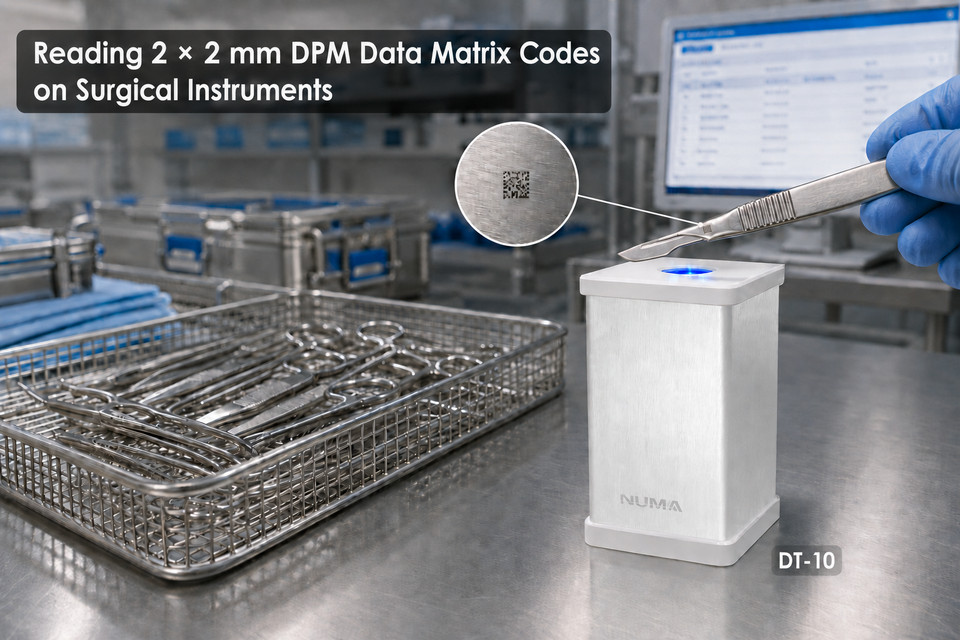
Reading 2x2mm DPM Data Matrix Codes on Surgical Instruments Case Study
A leading Brazilian healthcare technology company provides management and traceability solutions for hospital Central Sterile Supply Departments (CSSDs). Its system helps hospitals track surgical instruments throughout cleaning, disinfection, sterilization, storage, and distribution. To ensure that every instrument can be correctly identified at each stage, permanent Data Matrix codes are laser-marked directly onto the metal surfaces of the instruments. The company needed a compact fixed-mount barcode scanner that could be integrated into its traceability system and reliably read these challenging codes in daily CSSD operations.
Challenge
Unlike standard printed barcodes, Direct Part Marking (DPM) codes are permanently marked onto the surface of an item. Their readability can be affected by the material, marking quality, surface reflection, code size, and scanning angle.
In this application, the scanner needed to read:
• Laser-marked Data Matrix codes
• Codes directly marked on metal surgical instruments
• Data Matrix codes as small as 2 x 2 mm
• Codes on reflective, curved, or irregular surfaces
• Instruments of different shapes and sizes
• Codes presented repeatedly during daily CSSD operations
A conventional barcode scanner may have difficulty capturing sufficient contrast from these small, reflective markings. The customer therefore required a scanner specifically designed for DPM barcode reading.
Solution
NUMA recommended the DT-10, a compact DPM barcode scanner developed for reading small and challenging codes. The DT-10 was evaluated using the customer’s actual laser-marked surgical instrument samples. During testing, it successfully captured Data Matrix codes down to 2 x 2 mm, demonstrating its suitability for the customer’s medical instrument traceability application. Its compact form factor also allowed the customer to integrate the scanner into its existing workstation and management system without occupying excessive space in the CSSD working area.
Result
By integrating the DT-10 into its medical instrument traceability solution, the customer gained a practical way to capture small, laser-marked Data Matrix codes from surgical instruments.
The solution helps the customer:
• Identify individual surgical instruments accurately
• Improve traceability throughout the sterilization cycle
• Reduce manual data-entry errors
• Maintain a consistent scanning process
• Support more efficient CSSD workflows
• Strengthen instrument control and patient safety
The DT-10 provided the DPM reading performance, compact size, and integration flexibility required for this specialized healthcare application.
Best-Fit Applications for DT-10
The DT-10 is particularly suitable for:
• Surgical instrument identification
• CSSD and sterile processing workflows
• Medical device traceability
• Small DPM Data Matrix code reading
• Laser-marked metal components
• Electronics and precision-component tracking
• Laboratory sample and equipment identification
• Compact fixed-mount scanning stations
Need a DPM Scanner for Surgical Instrument Traceability? Share your code size, marking method, material, surface condition, system interface and expected data output with our team. We can help evaluate whether DT-10 is the right fit for your application.
- Related Products
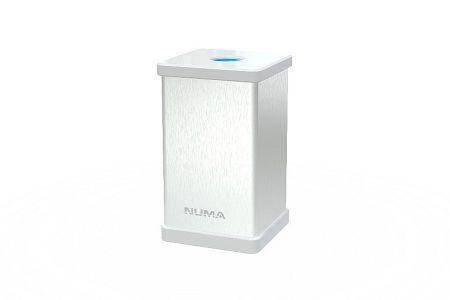
Compact Medical DataMatrix Reader
DT-10
The Compact Medical DataMatrix Reader is a high-precision scanner designed specifically for UDI (Unique Device Identification) barcodes used in medical...
Details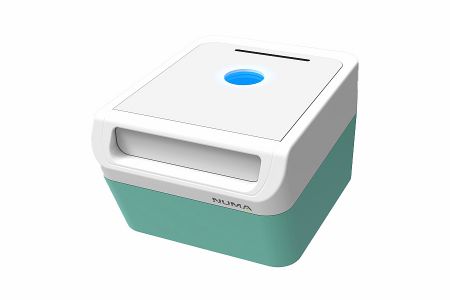
Surgical Instrument Barcode Scanner for Medical Device Tracking
DT-90
The Surgical Instrument Barcode Scanner is a high-precision hands-free desktop scanner engineered to read extremely small DPM (Direct Part Marking) barcodes...
Details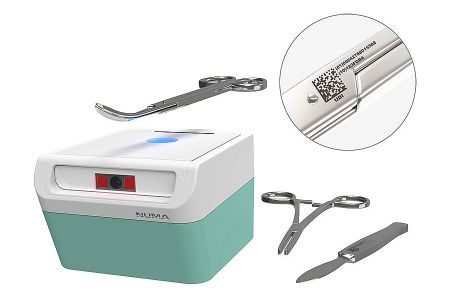
Single Tube 1D / 2D Barcode Reader for Medical and Laboratory Applications
DT-90F
The Single Tube 1D / 2D Barcode Reader delivers exceptional accuracy and speed for reading barcodes on tubes, vials, and ampoules in medical and laboratory...
Details